
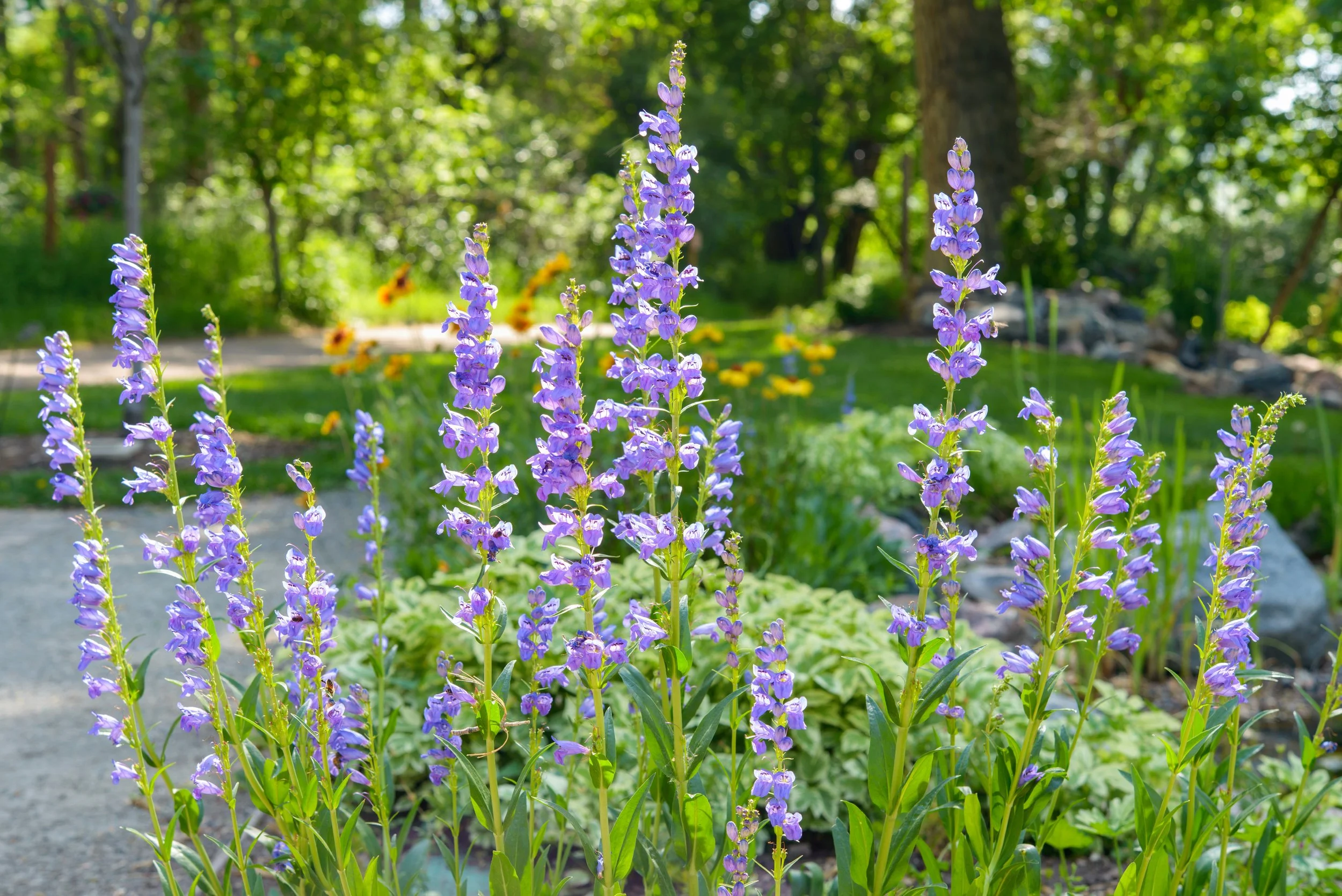
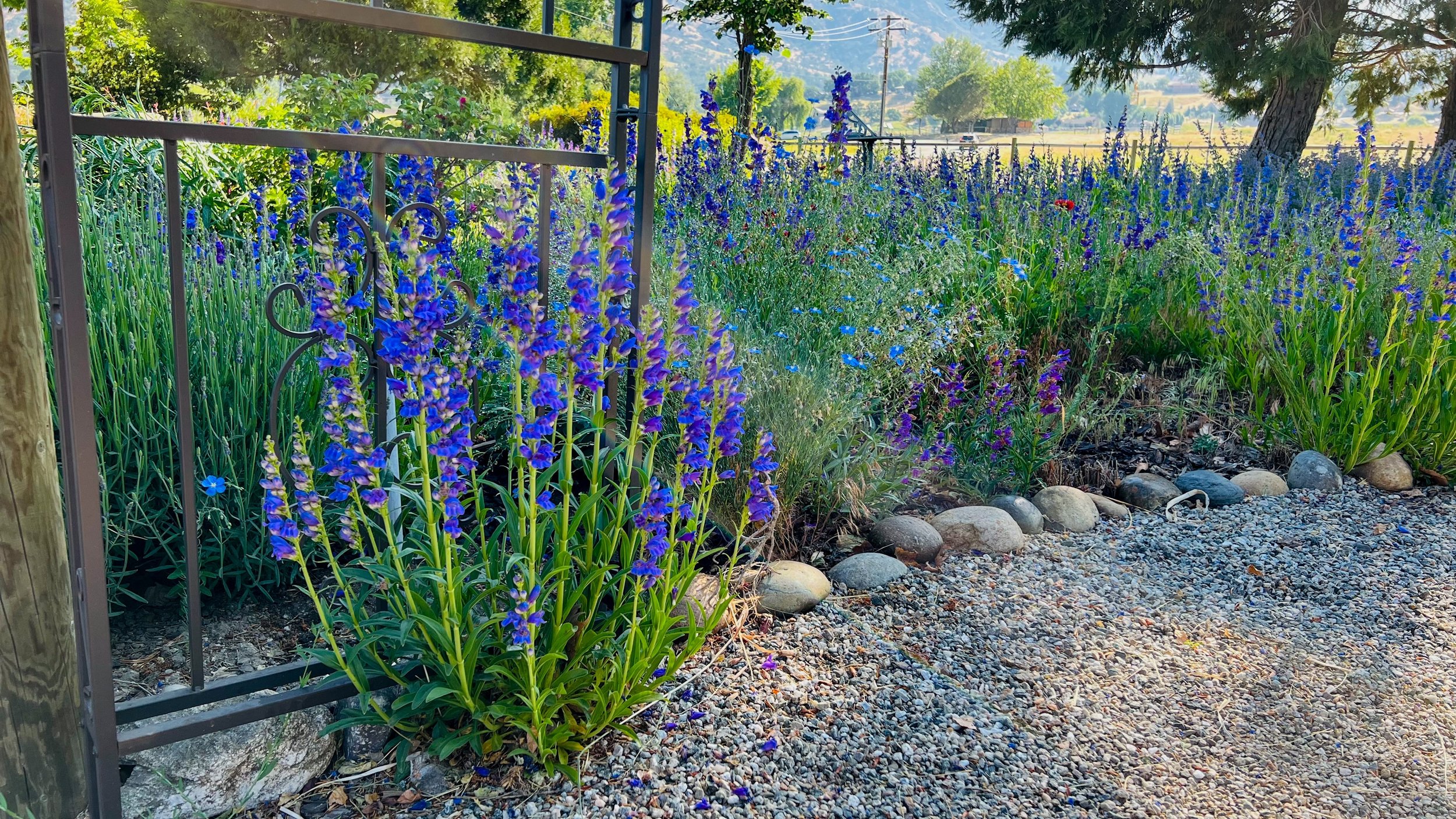
Rocky Mountain Penstemon (Penstemon strictus) is a hardy, long-lived perennial native to the western United States. Known for its striking spikes of intense blue-to-purple flowers, it is one of the easiest penstemons to grow and is widely used in xeriscaping, pollinator gardens, and erosion control. Low water needs once established. Overwatering or soggy soil can lead to root rot.
Native Range: Wyoming, Colorado, New Mexico, Utah, and Arizona.
Hardiness Zones: USDA Zones 3–9.
Wildlife Appeal: Highly attractive to bumblebees, hummingbirds, and butterflies.
1/4g seed packet (about 200 seeds)
Packaged in 4"x6" brown kraft paper envelope, with planting info/qr code on back.
Common Name: Rocky Mountain Penstemon
Scientific Name: Penstemon strictus
Life Cycle: Perennial
Height: 18-36”
Season: Late spring - Summer
Exposure: Full sun
Color: light blue to deep purple
Planting Instructions: Best sown in late fall or early winter. The seeds prefer a cold-moist environment (2–3 months at 40°F) to break dormancy.
Rocky Mountain Penstemon (Penstemon strictus) is a hardy, long-lived perennial native to the western United States. Known for its striking spikes of intense blue-to-purple flowers, it is one of the easiest penstemons to grow and is widely used in xeriscaping, pollinator gardens, and erosion control. Low water needs once established. Overwatering or soggy soil can lead to root rot.
Native Range: Wyoming, Colorado, New Mexico, Utah, and Arizona.
Hardiness Zones: USDA Zones 3–9.
Wildlife Appeal: Highly attractive to bumblebees, hummingbirds, and butterflies.
1/4g seed packet (about 200 seeds)
Packaged in 4"x6" brown kraft paper envelope, with planting info/qr code on back.
Common Name: Rocky Mountain Penstemon
Scientific Name: Penstemon strictus
Life Cycle: Perennial
Height: 18-36”
Season: Late spring - Summer
Exposure: Full sun
Color: light blue to deep purple
Planting Instructions: Best sown in late fall or early winter. The seeds prefer a cold-moist environment (2–3 months at 40°F) to break dormancy.